-1.jpg)
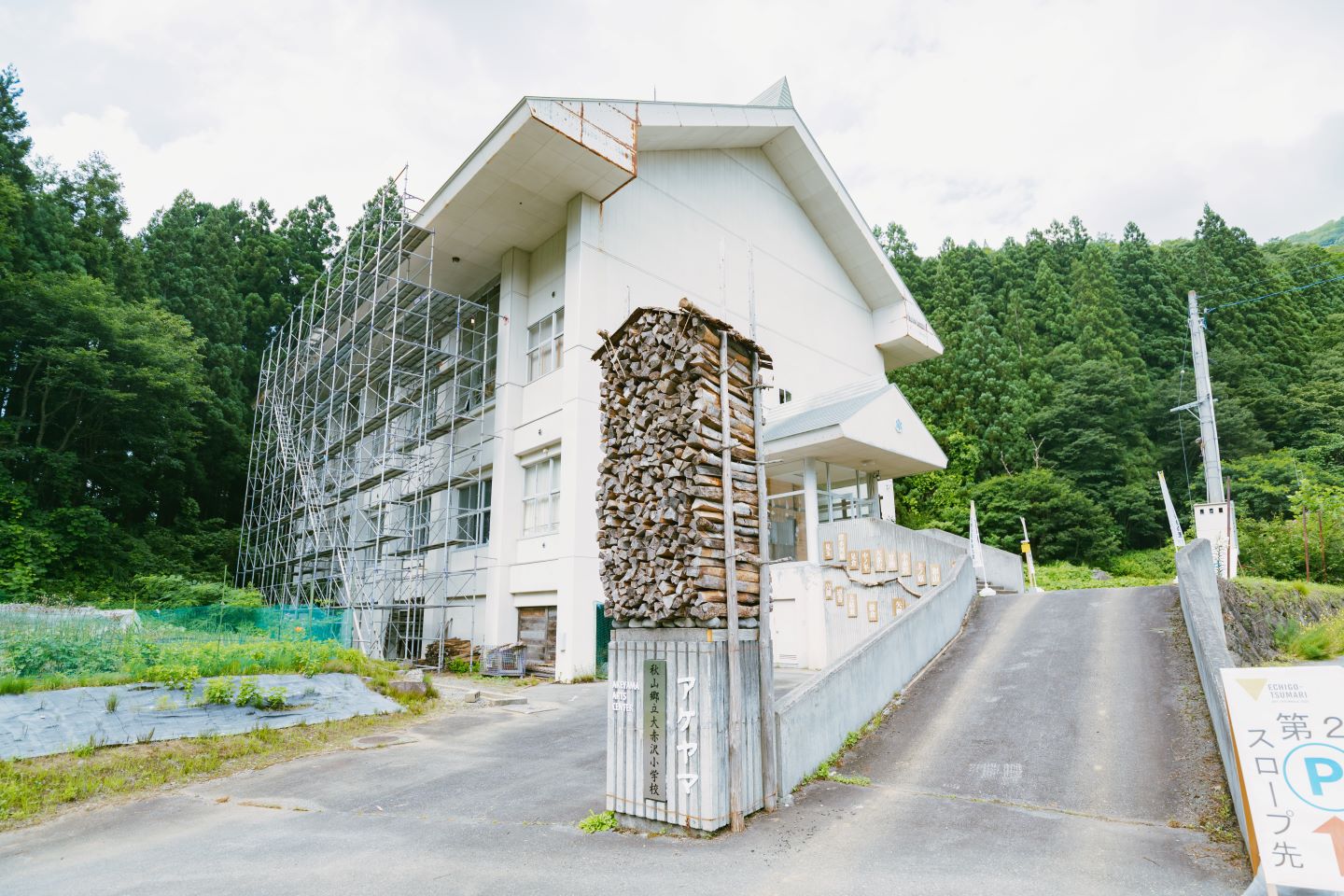
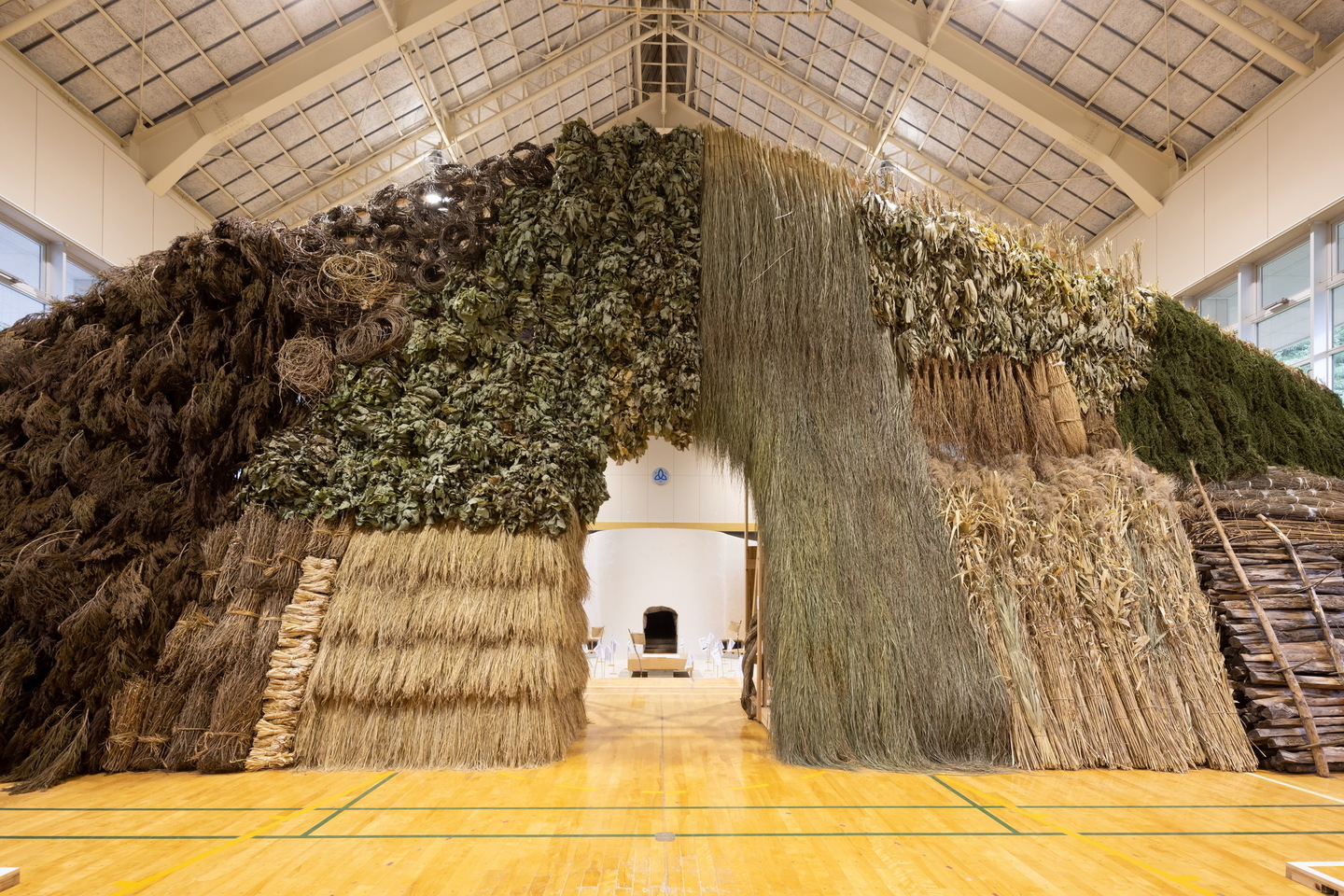
Akeyama Arts Center is a secluded region spanning Niigata Prefecture and Nagano Prefecture. “Akeyama Arts Center—Akiyamago Municipal Oakasawa Elementary School” is a project born from the question of whether the traditional mountain lifestyle and wisdom found here might offer a new perspective on how we live today.
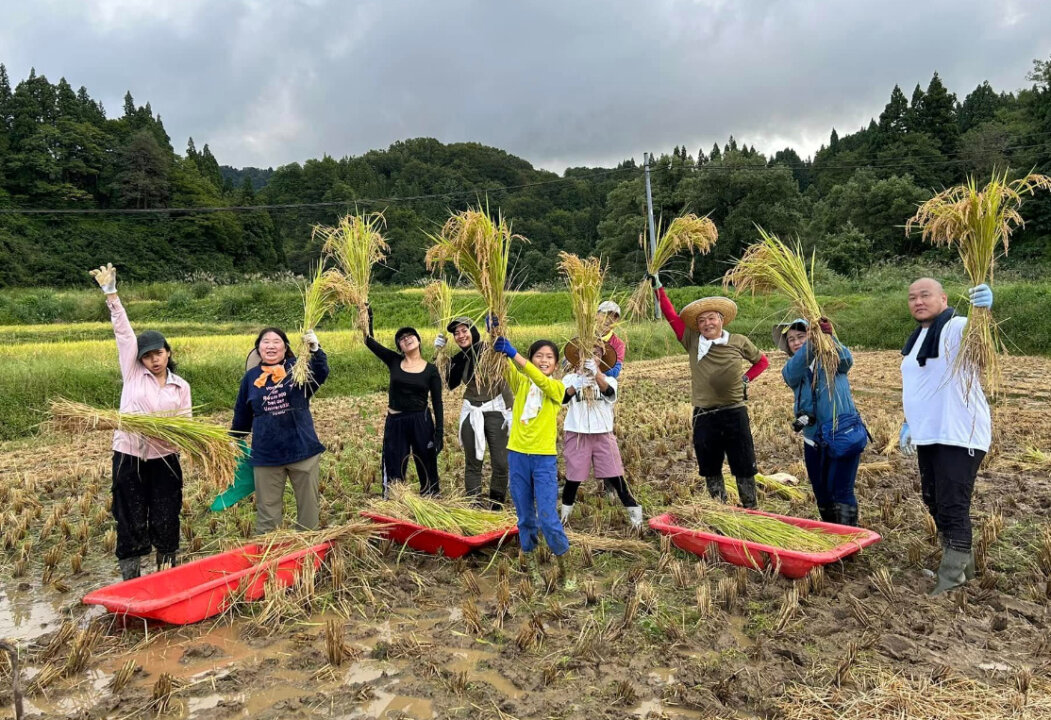
In Inoue Yui’s Akayama project, “Mountains are where it all begins,” we gather and utilize natural mountain materials that have long been cherished in Akiyamago to carry out various activities aimed at reviving local customs. We are now recruiting members for the “Mountains are where it all begins Club” to help energize these activities. You can participate for as little as one day. Please feel free to join us.
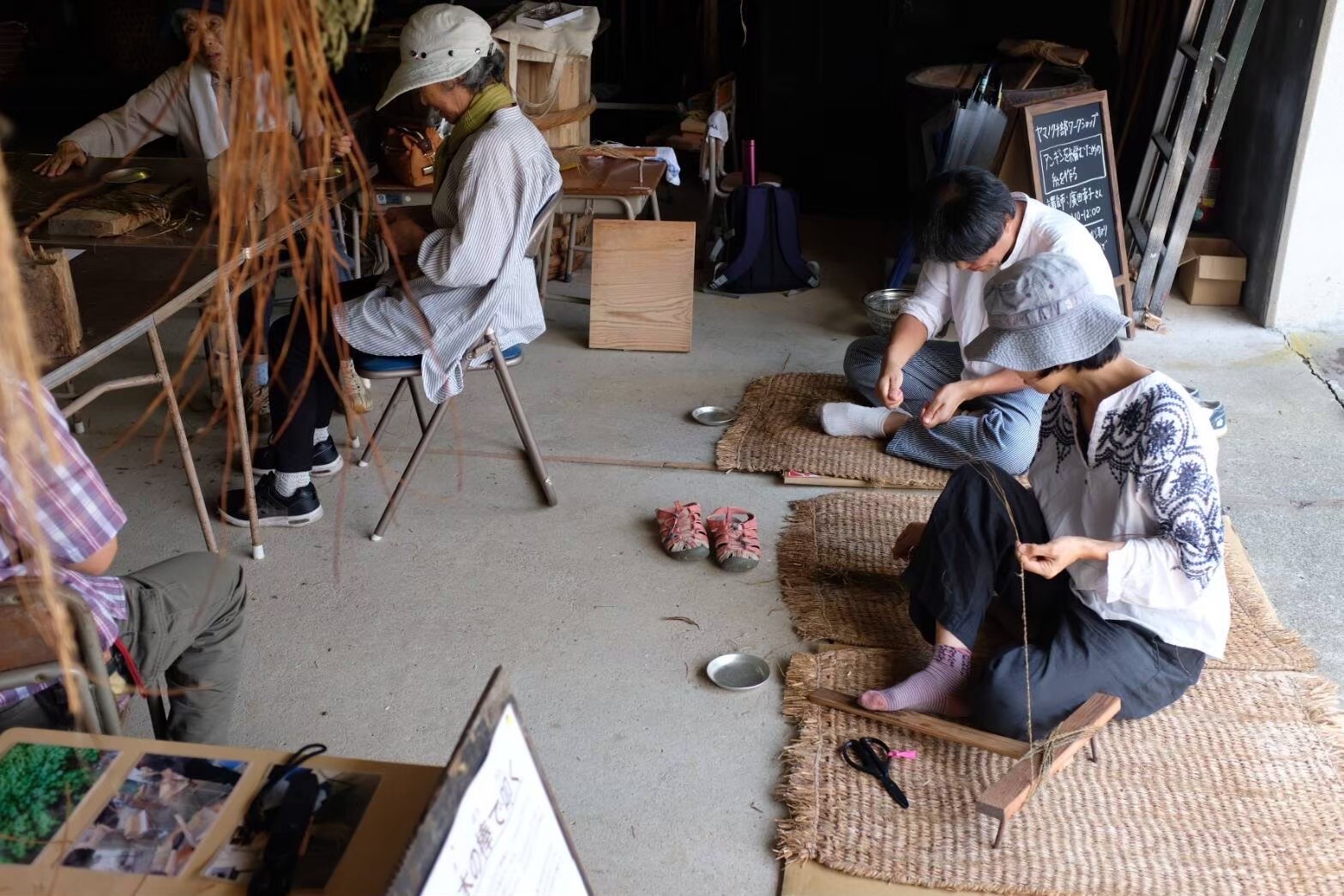
◇《Angin-Making Workshop》 (2 sessions total)
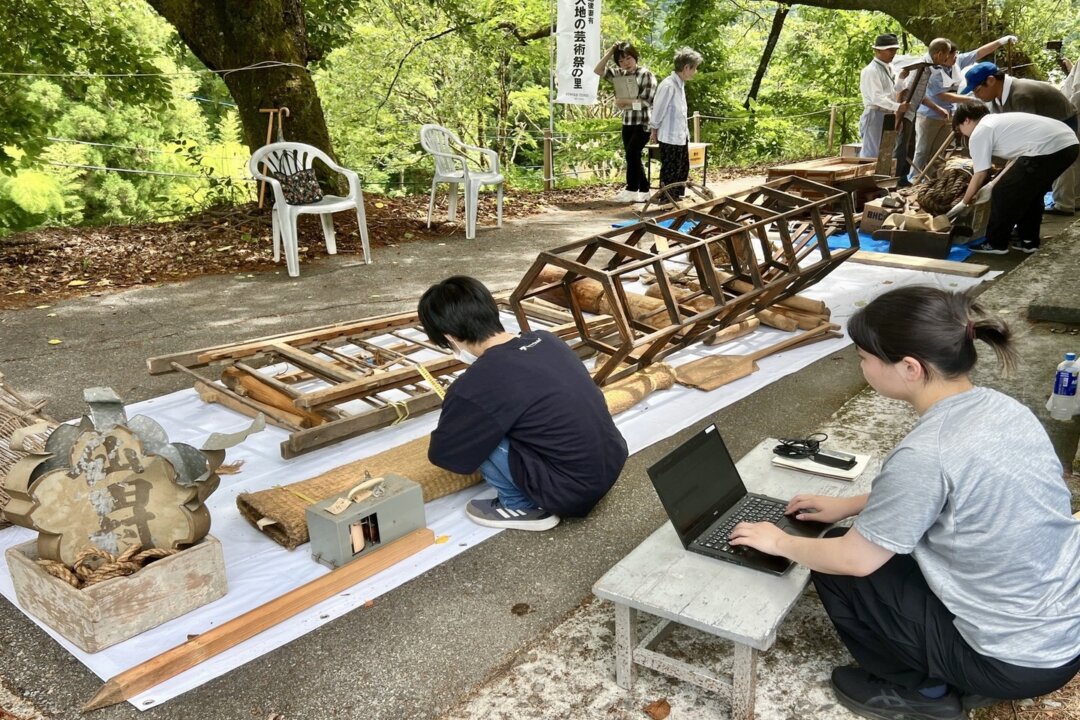
“Angin” refers to a type of fabric woven from threads made from wild plants such as akaso and karamushi, and it has been used for clothing and bags since ancient times. In this series of workshops, participants can learn the traditional techniques of Akiyamago step by step, from gathering the materials to spinning them into thread.
① Threading the loom and weaving (Guest: Local expert Sachiko Hirota)
Using akaso, karamushi, and ira—which we’ve been gathering in the mountains, extracting their fibers, and spinning into yarn since the year before last—we’ll finally begin weaving angin (woven fabric) this year. We’ll wind the warp threads onto a komozuchi made from taniutsugi, thread the loom, and try our hand at weaving.The Angin we weave together will be part of next year’s exhibition.
■ Date & Time: August 2 (Sun) 10:00 a.m.–12:00 p.m.
■ Location: Akeyama Arts Center – Akiyamago Municipal Oakasawa Elementary School – Basement Piloti
■ Fee: 500 yen *No admission fee required (however, those wishing to view the artworks inside the building must present a Common Ticket or pay the admission fee)
■ Reservation: Required*We are not accepting any more reservations. All slots are full.
② Weaving & Making Thread from Akaso
We’ll beat bundles of harvested and dried Akaso with wooden sticks, then knead them by hand to create soft thread, which we’ll weave into the weft of the Angin. The Angin we weave together will be part of next year’s artwork.■Date & Time: Saturday, August 8, 1:00 PM–5:00 PM
■Location: Akeyama Arts Center – Akeyama-go Municipal Oakasawa Elementary School – Basement Piloti
■Fee: 500 yen *No admission fee required (however, those wishing to view the artworks inside the building must present a Common Ticket or pay the admission fee)
■Reservation: Reservations required
◇ Workshop on Peeling Tochi Nuts & Making Kozawashi *In collaboration with Tomoko Inami (Snow Country Food Research Lab)*
Horse chestnuts have a strong astringency and cannot be eaten as is, but because they can be stored for long periods when dried, they have long been valued as a famine food. In this article, we’ll try “Kozawashi”—a method of removing the astringency that was once practiced in Akiyamago (boiling the horse chestnuts, grinding them into a powder, rinsing the powder under running water to remove the astringency, and then eating the powder as is).
On the first day, we’ll use stones and “mujiri” (a shelling tool) to peel the horse chestnuts, boil them until they fall apart, and then rinse them under running water. On the second day, to further remove the astringency and ensure thorough rinsing, we’ll mix together the roots of Triacanthus, horse chestnut husks, and mangaki juice, rinse the mixture again under running water, and then taste the flour as is. You’re more than welcome to bring various types of nuts and your own tools for peeling them.
■Date and Time: Saturday, September 26, 1:00 PM–5:00 PM; Sunday, September 27, 10:00 AM–12:00 PM
■Location: Akeyama Arts Center – Akiyamago Municipal Oakasawa Elementary School – Basement Piloti
■Fee: 1,000 yen for one day; 1,500 yen for both days *No admission fee required (however, those wishing to view the artworks inside the building must present a Common Ticket or pay the admission fee)
■Reservations: Reservations required*We are not accepting any more reservations for September 27. Reservations are still available for September 26.
◇Workshop: Making Tochimochi & Tasting Various Nuts 《In collaboration with: Tomoko Inami (Snow Country Food Research Lab)》
Starting with the preliminary ash-blending process, we’ll experiment with our methods to create two types of tochi mochi: “yellow tochi mochi,” which has a mild flavor and aroma, and “reddish-brown tochi mochi,” which has a more distinctive flavor. We’ll also peel the shells off nuts—such as beech, walnut, and hornbeam—that don’t require de-bittering, then roast them or grind them into flour to taste. Feel free to bring your own nuts—we’d love to have them!
■Date and Time: November 3 (Tue, Holiday) 1:00 PM–5:00 PM
■Location: Oakasawa Village Folk Art Museum
■Fee: 2,000 yen *No admission fee required (however, those wishing to view the artworks inside the museum must present a Common Ticket or pay the admission fee)
■Reservation: Required
■What to Bring: Apron, dishcloth, tenugui*We are not accepting any more reservations. All slots are full.
Summary
| Venue |
Akeyama Arts Center—Akiyama-go Municipal Oakasawa Elementary School—(154 Oakasawa-cho, Tsunan Town, Nakauonuma District, Niigata Prefecture) and the surrounding area
|
|---|
.jpg)
-200x200.jpg)
Official Tours / Itineraries
Related Events
-1-1080x608.jpg)
Stay connected with the ETAT official social media to receive the latest news and event information, and the many seasonal faces of Echigo-Tsumari as well as new issue of the ETAT official media, “Art from the Land”.